

Islamic University, Al-Diwaniyah
The primary objective of this study was to conduct a comprehensive assessment of temporal trends and geographical disparities in the prevalence of type 2 diabetes-related complications across the governorates of Iraq during the period from 2015 to 2023, addressing the existing knowledge gap resulting from the scarcity of accurate statistical data on this vital health issue.
American Journal of Biology and Natural Sciences
To achieve this objective, the study employed a longitudinal analytical cohort approach involving a large sample of 847,293 adults with diabetes, distributed across five geographical regions, based on records from the National Diabetes Registry and the Ministry of Health.
entitled:
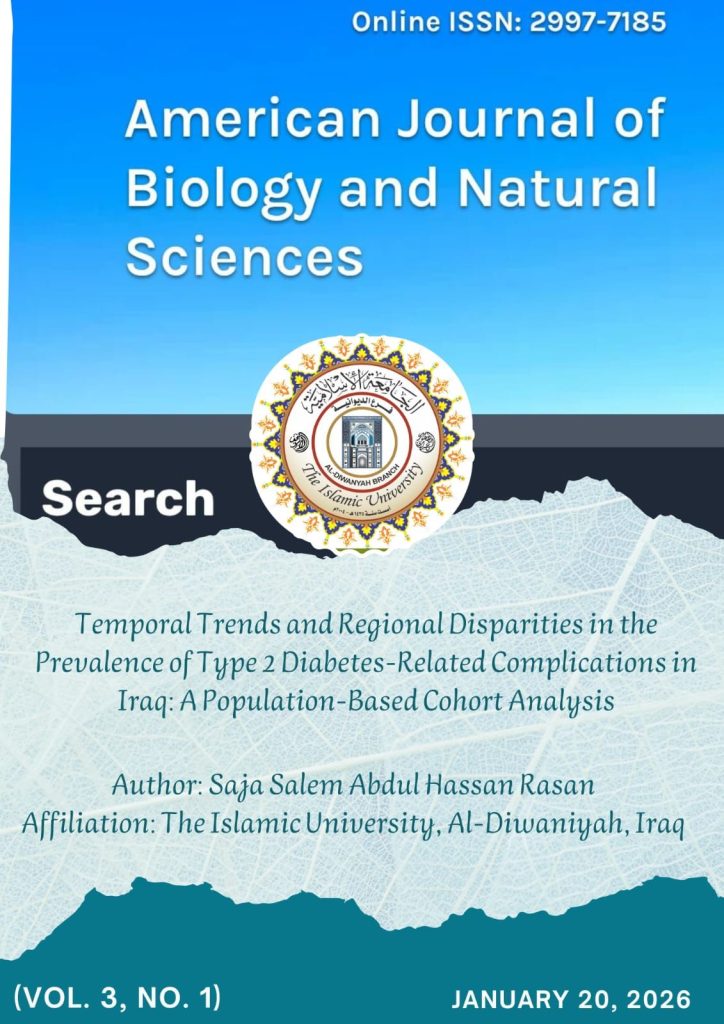
Temporal Trends and Regional Disparities in the Prevalence of Type 2 Diabetes-Related Complications in Iraq: A Population-Based Cohort Analysis
It is worth noting that the journal is published by:
BioScience Academic Publishing
International Standard Serial Number (Online ISSN): 2997-7185
The primary objective of this study was to conduct a comprehensive assessment of temporal trends and geographical disparities in type 2 diabetes-related complications across the governorates of Iraq during the period from 2015 to 2023, addressing the knowledge gap resulting from the scarcity of accurate statistical data on this vital health issue.
To achieve this objective, the study employed a longitudinal analytical approach involving a large sample of 847,293 adults with diabetes, distributed across five geographical regions, based on records from the National Diabetes Registry and the Ministry of Health.
The findings revealed a concerning increase in the prevalence of complications, rising from 34.2% in 2015 to 52.8% in 2023, with a notable increase in diabetic nephropathy and cardiovascular diseases. The analysis also demonstrated substantial regional disparities, with the Kurdistan Region recording the lowest complication rate at 31.4%, compared with the highest rate in the southern governorates at 64.2%. The study also found that living in urban areas was associated with a lower likelihood of developing complications compared with living in rural areas.
The study concludes that there is a need to intensify therapeutic interventions and develop local healthcare systems to reduce the growing risks of diabetes-related complications and address socioeconomic and geographical disparities in healthcare provision in Iraq.
To achieve this objective, the study employed a longitudinal analytical approach involving a large sample of 847,293 adults with diabetes, distributed across five geographical regions, based on records from the National Diabetes Registry and the Ministry of Health.
The findings revealed a concerning increase in the prevalence of complications, rising from 34.2% in 2015 to 52.8% in 2023, with a notable increase in diabetic nephropathy and cardiovascular diseases. The analysis also demonstrated substantial regional disparities, with the Kurdistan Region recording the lowest complication rate at 31.4%, compared with the highest rate in the southern governorates at 64.2%. The study also found that living in urban areas was associated with a lower likelihood of developing complications compared with living in rural areas.
The study concludes that there is a need to intensify therapeutic interventions and develop local healthcare systems to reduce the growing risks of diabetes-related complications and address socioeconomic and geographical disparities in healthcare provision in Iraq.
Research Link in the Journal