Islamic University, Al-Diwaniyah
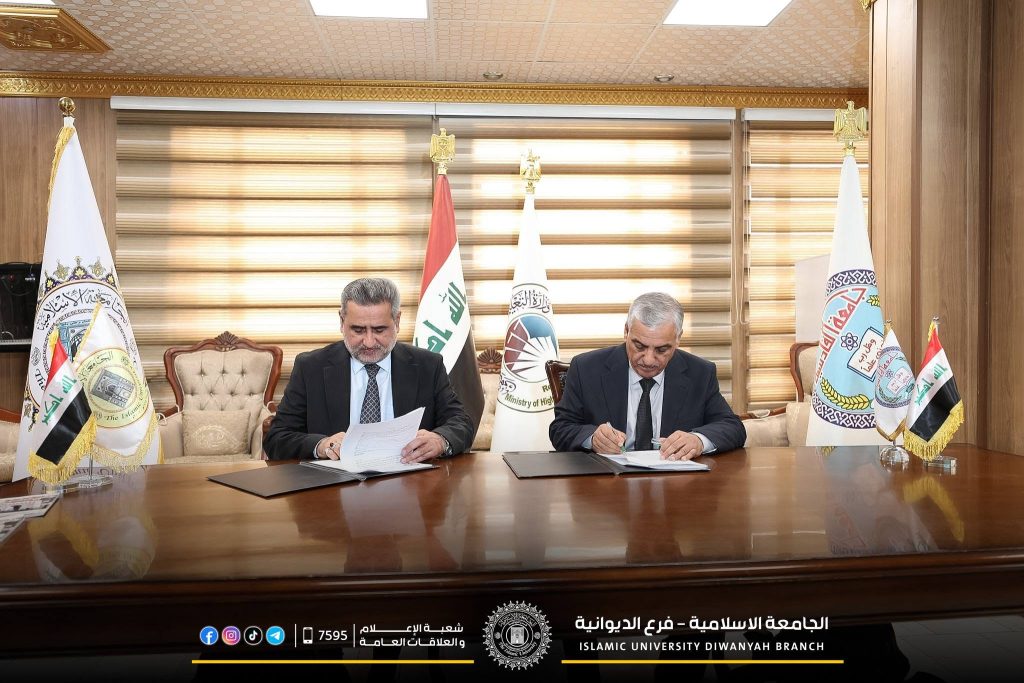
In a significant step aimed at strengthening scientific collaboration and expanding opportunities for the academic development of our graduates, and in line with the directives of the Ministry of Higher Education and Scientific Research to promote strategic partnerships and foster cooperation among academic institutions, thereby enhancing academic and professional standards, a Joint Scientific Cooperation Agreement was signed between the Islamic University and the University of Al-Qadisiyah.
In a significant step aimed at strengthening scientific collaboration and expanding opportunities for the academic development of our graduates, and in line with the directives of the Ministry of Higher Education and Scientific Research to promote strategic partnerships and foster cooperation among academic institutions, thereby enhancing academic and professional standards, a Joint Scientific Cooperation Agreement was signed between the Islamic University and the University of Al-Qadisiyah.
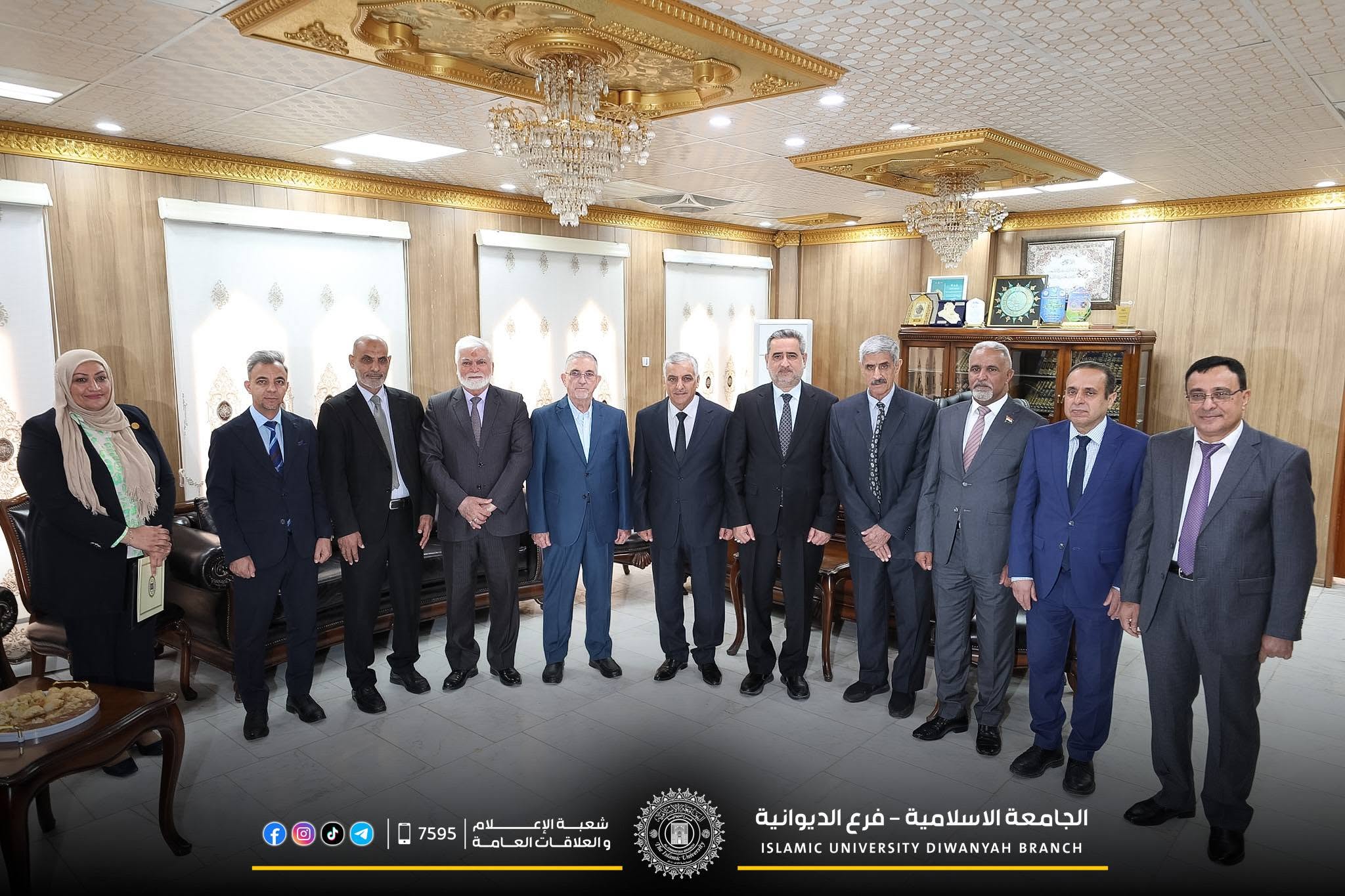
The signing ceremony was attended by representatives of both institutions. Representing the Islamic University were Professor Dr. Ammar Abdul Amir Al-Salami, President of the University; Professor Dr. Adel Al-Baghdadi, Director of Scientific Affairs; Dr. Abdul Amir Abdul Karim Al-Atrash, Director of Public Relations; Assistant Professor Jalal Ali Hashim, Vice President for Scientific Affairs at the Al-Diwaniyah Branch; Dr. Ibrahim Saleh, Vice President for Administrative Affairs at the Al-Diwaniyah Branch; and Assistant Professor Dr. Qasim Jumaa Ali Al-Attabi, Head of the Quality Assurance and University Performance Division.
Representing the University of Al-Qadisiyah were Professor Dr. Rahi Mahdi Kalaf Al-Yasiri, President of the University; Professor Dr. Sattar Abdul Hassan, Vice President for Scientific Affairs; Professor Dr. Mohammed Hamza Al-Hashemi, Vice President for Administrative Affairs; Assistant Professor Dr. Asmaa Abdul Amir, Director of Relations; in addition to a distinguished group of university faculty and staff.
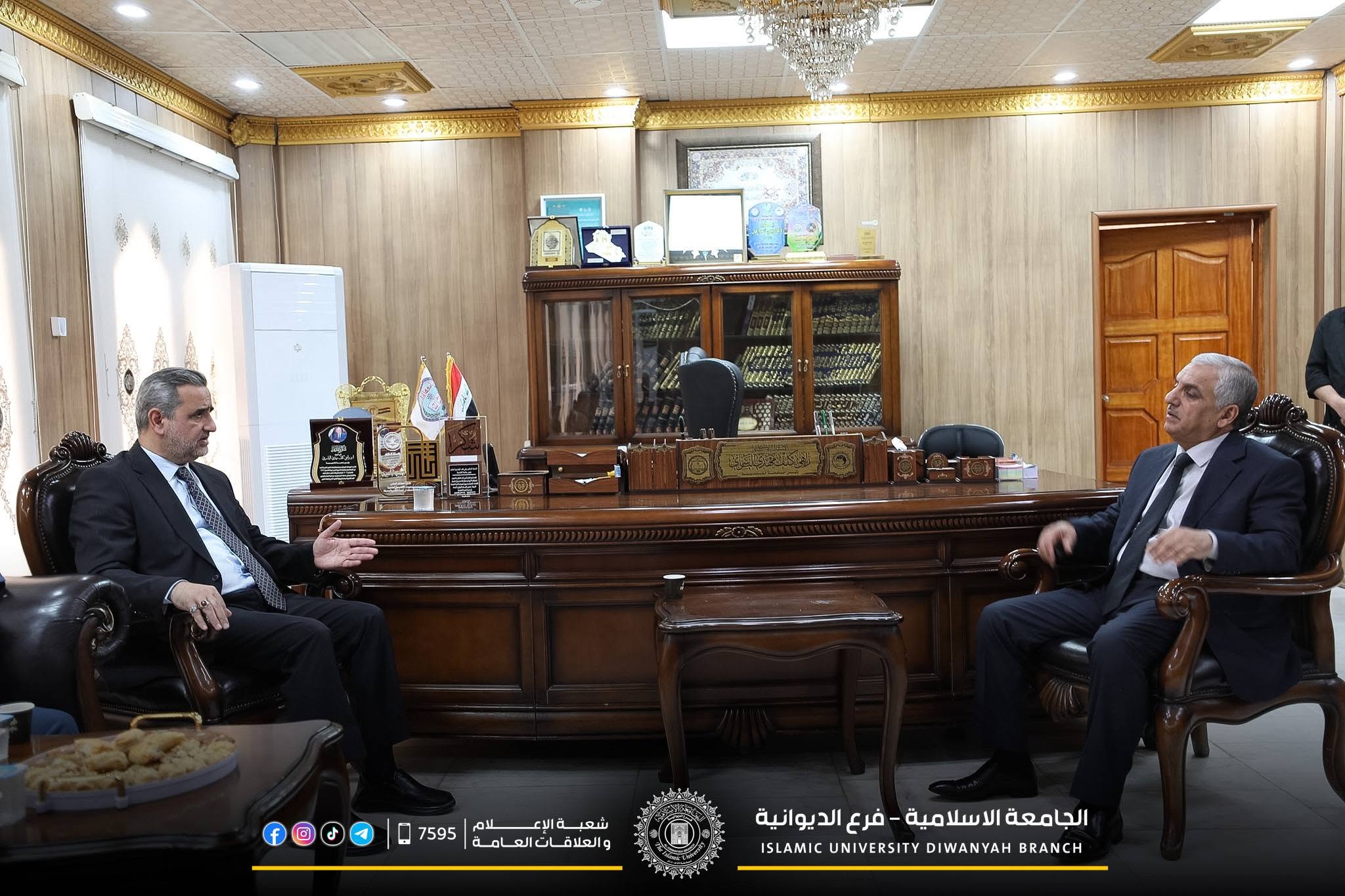
The agreement was officially signed at the University of Al-Qadisiyah in an academic atmosphere that reflected the spirit of cooperation and institutional integration between the two universities.
The agreement provides a framework for strengthening bilateral cooperation in scientific and research fields. It includes supporting faculty members through the exchange of academic expertise and best practices, organizing joint scientific activities such as conferences, workshops, and specialized seminars, activating twinning programs between colleges and academic departments, developing collaborative research projects, and promoting joint supervision of postgraduate studies.
Furthermore, the agreement seeks to enhance academic and administrative performance by adopting best educational practices in accordance with quality assurance and academic accreditation standards. It also aims to promote knowledge integration and the exchange of scientific resources, leading to distinguished educational and research outcomes that serve society and respond to the evolving needs of the labor market.